





Qatar History and Heritage: From Desert Traditions to Modern Life
Qatar History and Heritage: From Desert Traditions to Modern Life
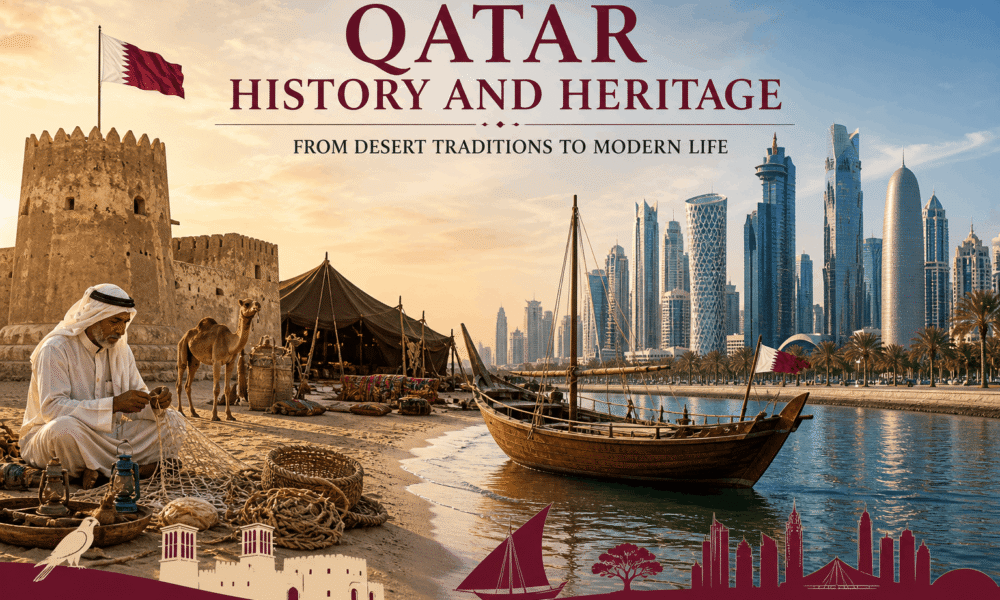
Qatar is a small country in the Arabian Gulf, but its story is full of courage, culture, and great change. The Qatar history and heritage tells us how people survived in the desert, worked in the sea, and built one of the most modern countries in the world.
Today, Qatar is known for its tall buildings, advanced technology, and strong economy. However, its roots are still connected to old traditions and family values. In this article, we will explore Qatar history and heritage in very simple English so every reader can understand it easily.
According to Allen J. Fromherz in Qatar: A Modern History, the history of Qatar is deeply connected with tribal life, trade, and cultural traditions.
Early Life in the Desert
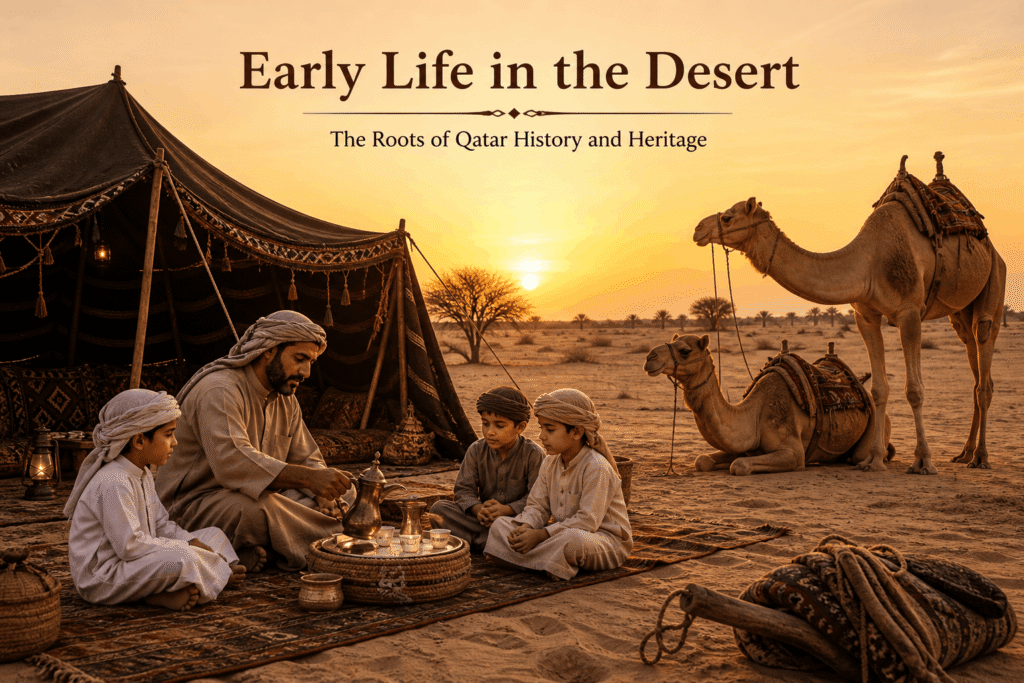
The early part of Qatar history and heritage began in the desert. Many years ago, people lived in simple tents. They moved from one place to another in search of water and food. These people were called Bedouins.
Life in the desert was not easy. The weather was very hot, and water was difficult to find. Because of this, people learned how to survive in tough conditions. Camels were used for travel, food was shared among families, and strong community bonds were created.
Children learned survival skills from their parents. At the same time, respect for elders was taught from a young age. These values became an important part of Qatar history and heritage.
The Importance of Bedouin Culture
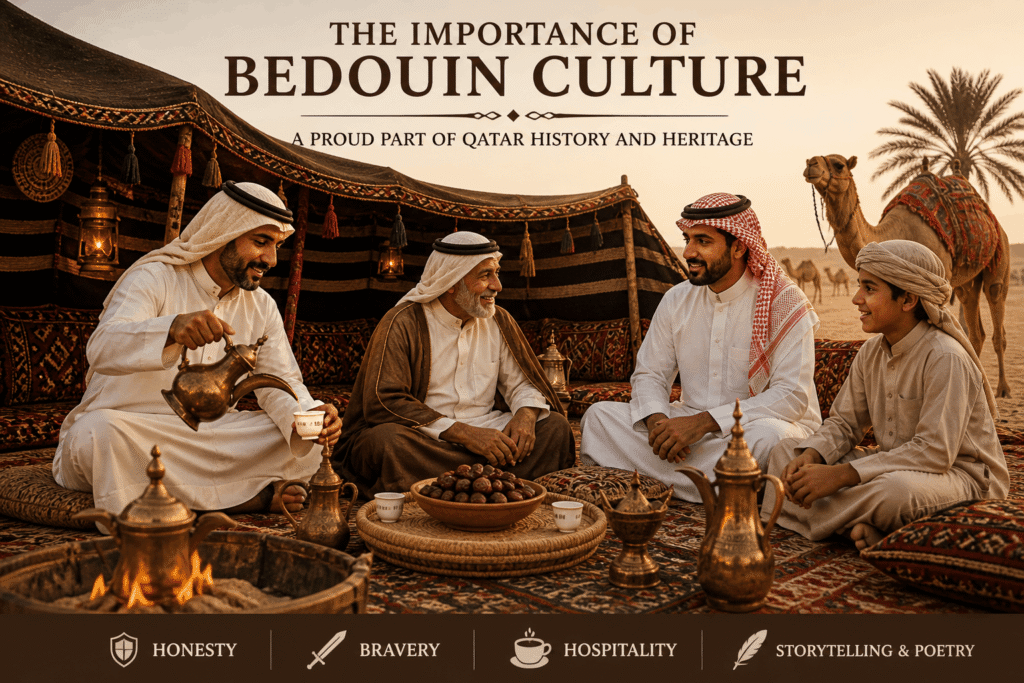
Bedouin culture has played a major role in Qatar history and heritage. Bedouin families believed in honesty, bravery, and hospitality. Guests were always welcomed with Arabic coffee, fresh dates, and warm smiles.
In addition, storytelling was an important tradition. Elders shared stories about family history, desert journeys, and tribal heroes. Through these stories, culture was passed from one generation to another.
Traditional poetry was also loved by many people. Songs and poems were used during celebrations and social gatherings.
According to Rosemarie Said Zahlan in The History of Qatar, Bedouin traditions helped shape the identity of modern Qatar.
Pearl Diving and Sea Life
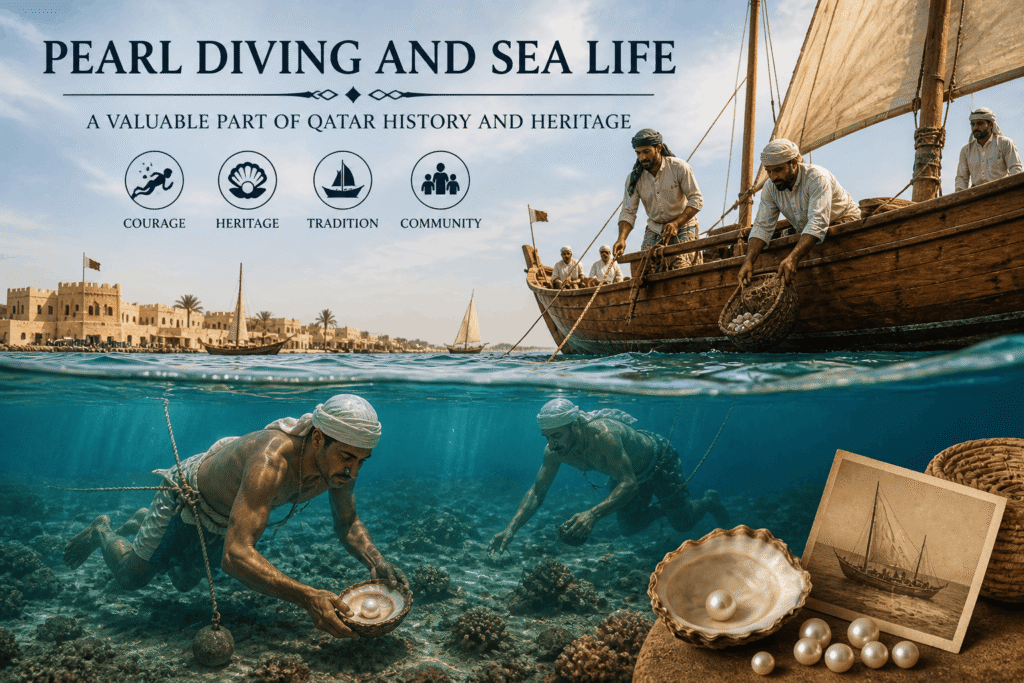
One of the most important chapters in Qatar history and heritage is pearl diving. Before oil was discovered, the sea was the main source of income for many families.
Men sailed in wooden boats and dived deep into the sea to find pearls. This work was very dangerous because no modern diving equipment was available. Still, the divers worked with courage and determination.
Pearls from Qatar were sold in many countries. As a result, pearl diving became an important part of the economy.
Families waited for months while the divers were away. When they returned, the whole community celebrated together.
However, the pearl industry later faced problems. Artificial pearls entered the market, and the demand for natural pearls decreased.
Even today, pearl diving is remembered as a proud part of Qatar history and heritage.
Trade and Business in Old Qatar
Trade also played an important role in Qatar history and heritage. Qatar was located in an important position in the Gulf region. Because of this, merchants traveled between Qatar, India, Persia, and other Arab lands.
People traded pearls, fish, dates, and handmade goods. Small markets became places where people met, bought products, and shared news.
Trade helped families improve their lives. At the same time, it connected Qatar with many cultures around the world.
The Discovery of Oil
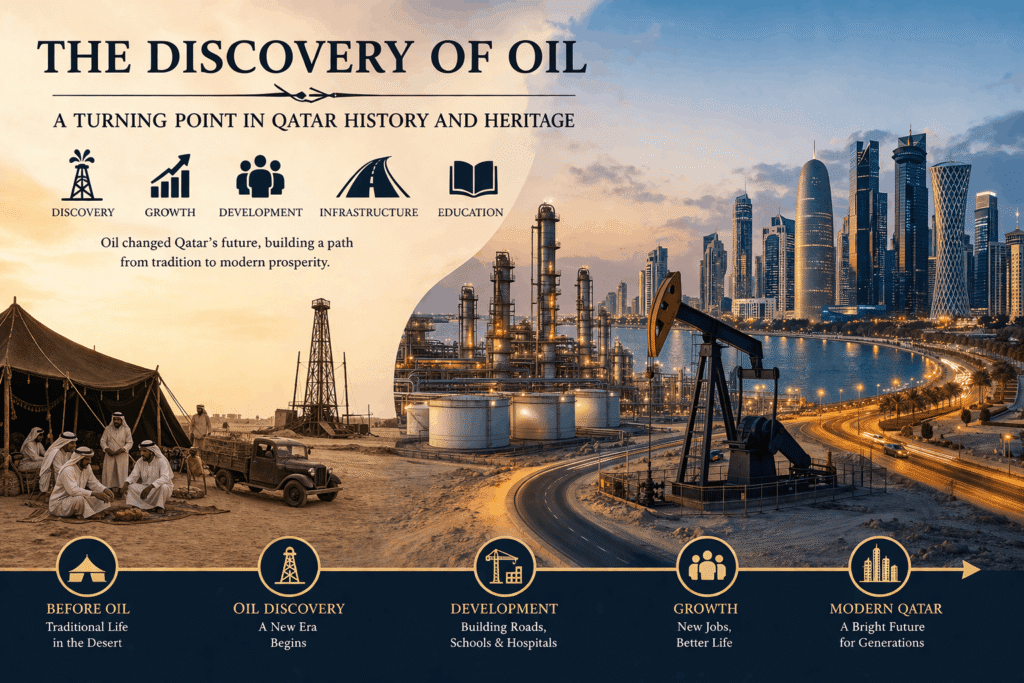
A major turning point in Qatar history and heritage happened in the twentieth century when oil was discovered.
After oil was found, Qatar changed very quickly. Roads were built. Schools were opened. Hospitals were created. New jobs were offered to thousands of people.
Life became easier for many families. People moved from villages to cities. Modern homes replaced old tents.
It is often said that oil transformed Qatar completely.
According to Jill Crystal in Qatar, the discovery of oil changed both the economy and society of the country.
The Growth of Modern Qatar
Today, Qatar history and heritage can be seen in both old traditions and modern development.
Doha, the capital city, is filled with beautiful buildings, modern roads, and advanced technology. At the same time, traditional clothing, family values, and cultural events are still respected.
For example, many men wear the white thobe, and many women wear the black abaya. National celebrations are also held with great pride.
Furthermore, Qatar has become a global center for sports, education, and business.
The hosting of the FIFA World Cup 2022 brought even more attention to the country.
Famous Heritage Sites in Qatar
To understand Qatar history and heritage, visiting historical places is very helpful.
Al Zubarah Fort
Al Zubarah Fort is one of the most famous heritage sites in Qatar. It is also recognized by UNESCO. This fort shows how people lived and protected their communities in the past.
Souq Waqif
Souq Waqif is a traditional market in Doha. Visitors can buy spices, clothes, perfumes, and handmade items there. The market keeps old Qatari culture alive.
Katara Cultural Village
Katara is a place where art, music, and culture are celebrated. It connects old traditions with modern creativity.
These places keep Qatar history and heritage alive for future generations.
Qatari Values and Family Traditions
Family is one of the strongest parts of Qatar history and heritage. Children are taught to respect parents, grandparents, and teachers.
Hospitality remains important. Guests are treated with kindness and honor.
In addition, religion plays an important role in daily life. Islamic traditions guide many social and family values.
Because of these values, Qatar has been able to grow while keeping its identity strong.
Conclusion
In conclusion, Qatar history and heritage is a story of survival, hard work, and success.
First, people lived in the desert and learned how to survive. Then, pearl diving and trade helped build the economy. After that, oil changed the country forever. Today, Qatar is one of the most modern nations in the world.
However, despite all this development, Qatar still respects its traditions, culture, and family values.
That is what makes Qatar history and heritage truly special.
References
- Rosemarie Said Zahlan — The History of Qatar (PDF)
- Allen J. Fromherz — Qatar: A Modern History
- Jill Crystal — Qatar (Jill Crystal Book PDF)
Frequently Asked Questions (FAQs)
1. What is Qatar history and heritage?
Qatar history and heritage is the story of Qatar’s culture, traditions, economy, and development from ancient times to today.
2. Who were the Bedouins in Qatar?
Bedouins were desert people who moved from place to place and lived a simple tribal life.
3. Why was pearl diving important in Qatar?
Pearl diving was important because it was one of Qatar’s main sources of income before oil.
4. How did oil change Qatar?
Oil brought economic growth, modern cities, schools, hospitals, and better living conditions.
5. What are the famous heritage sites in Qatar?
Famous sites include Al Zubarah Fort, Souq Waqif, and Katara Cultural Village.




No Comment! Be the first one.